
User personas have been integrated with user experience documentation just before the 2000s. These are fictional users that represent of real users that add up to the process to show the design and the user experience. A user persona is an example of what goals and behaviours of an idea of users that will use our project. Creating personas include information such as personalities, behaviour, skills and goals that can be taken from interviews and surveys. Making a persona is mainly fictional but should be realistic to what the designer aims to be their target audience and also be their “average user”. Usually more than one persona is created for a project, but there should be one that is mainly focused on for the design.
User Personas could include:
- Age
- Sex
- Occupation
- Hobbies
- likes/dislikes
- Other details germane to the product such as
- Behaviour patterns
- Goals
- Skills
- Attitudes
- Their environment
- Personalities
Coming to conclusions on each of these details should confirm the mindset, desires of the users. It is up to the designer to describe each of their user personas and decide any other important information that could assist their project. Personas give a clear vision in mind to the designer and audience of what the aims of project is to be made. Reviewing user personas before creating wire-framing is very important, so that every choice the designer makes they have this to refer to and make sure they’re on the right track. As well as checking these after your wireframes to make sure you are meeting their goals.
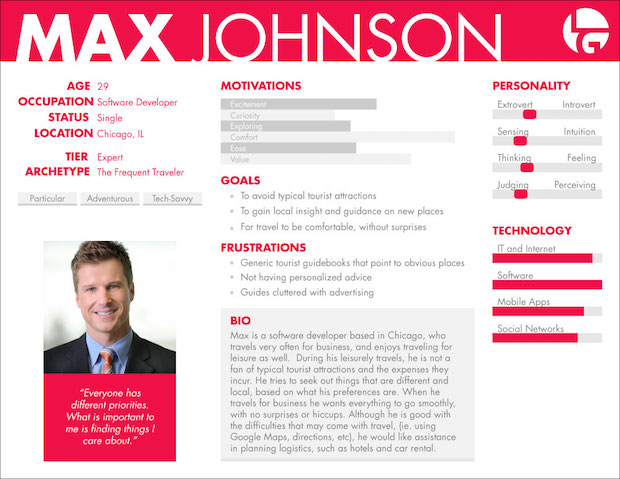
When designing personas you could consider large & small audiences. When choosing your core audience when creating your personas you can still cover a large portion of your users. The aim is to keep satisfying the core audience. When you have a smaller audience it means you know a lot more about their goals and be more specific with user personas. We need to ask ourselves, “What are the tasks your users are trying to perform?” when defining personas.
Think about the devices your users will be using such as computer, mobile phone or tablet and if the project will be made to cross all of these platforms. Mobile would most likely be the top choice for users in the younger generations, while the elderly don’t use these as much. When it comes to your project it is also important to know whether users will be just exploring your site/application or looking for specific sections. Designing your user experience should be followed by how your personas are like, putting specific content at the first page that they see or first pop up they view or even putting that content in areas where they would have to look for it themselves through navigation. If you have a large audience, you could use architecture fundamentals for websites, so they would have to browse and search through it all.
References:
How to Create a Concrete Buyer Persona. [Image] (2019, January 19) Retrieved from https://optinmonster.com/how-to-create-a-concrete-buyer-persona-with-templates-examples/
 Janaya's blog